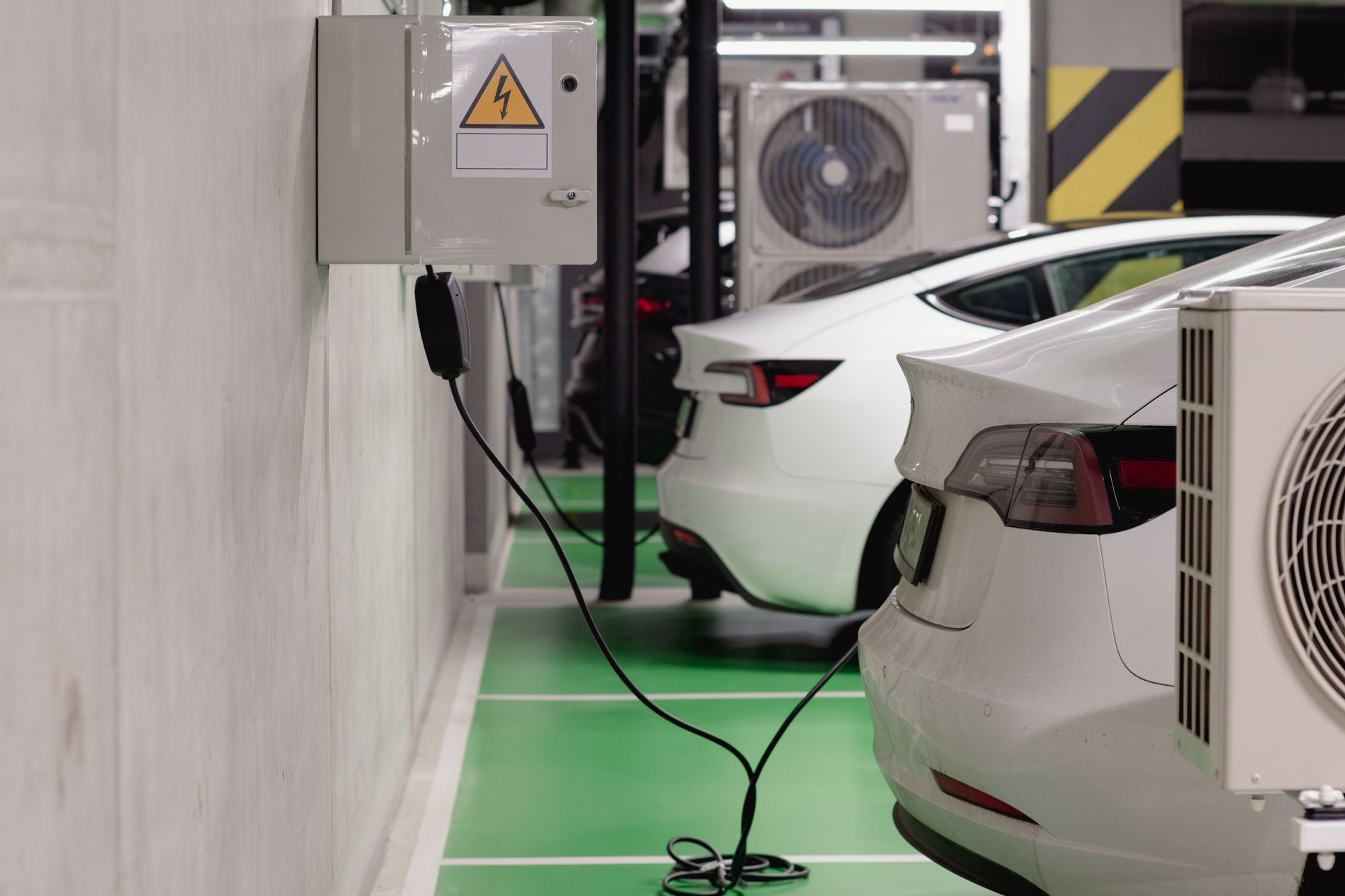
Level 2 EV Charger Installation Costs in Los Angeles: Full Pricing Breakdown
By A Lighting Inc.11 min read
Most homeowners pay $800 to $1,400 when their panel is already adequate (murphymadeinc.com). Panel upgrades add $1,500 to $4,000 (homeguide.com). LA city permits run $150 to $400, and LADWP rebates can offset $500 or more of your final bill (homeguide.com).
What Does Level 2 EV Charger Installation Cost in Los Angeles?
The national baseline sits at $800 to $2,700 for a complete project (murphymadeinc.com). This includes the charger unit, labor, materials, and permit. California electricians charge a median rate of $38 per hour (kaamcam.com). The state's cost of living keeps electrical labor 27% (kaamcam.com) above the national average. That premium combines with LADBS permitting requirements and C-10 licensing standards. Los Angeles prices push toward the higher end of any national range. The good news: California has already surpassed 200,000 public and shared private EV chargers statewide (energy.ca.gov), which means local contractors are experienced and competitive.
Typical Cost Ranges by Installation Scenario
Not every installation is the same. The table below organizes the four main scenarios you are likely to encounter as a Los Angeles homeowner, from a simple panel-ready garage to a complex job requiring a full service upgrade.
| Scenario | What's Involved | Estimated Total Cost |
|---|---|---|
| Simple (panel ready, short run) | Dedicated 240V circuit, under 25 ft, hardwired or NEMA 14-50 | $500 to $900 |
| Standard (modest wiring, minor panel work) | 25 to 75 ft conduit run, circuit breaker addition | $900 to $1,600 |
| Complex (panel upgrade, long run, or sub-panel) | 200A panel upgrade, 75+ ft conduit, or detached garage | $2,000 to $5,500+ |
| Multi-unit or commercial | Multiple EVSE units, load management, infrastructure | $3,000 to $10,000+ |
For simpler panel-ready homes, the labor-only portion is often quoted around $800 to $2,000, with charger hardware and permit fees added on top (voltaelectricinc.com). When a panel upgrade or a long conduit run enters the picture, costs move well above the $1,200 to $3,500 (trendxinsights.com) range. A panel upgrade alone adds $1,500 to $4,000 (homeguide.com). Underground conduit costs $10 to $25 per linear foot (homeguide.com). A detached garage can add $500 to $2,000 before any other work begins (homeguide.com). These are not rare scenarios in the San Fernando Valley or San Gabriel Valley, where older homes frequently have 100A panels and detached garages.
How LA Costs Compare to National Averages
Three measurable factors drive higher costs. First, California electricians command higher wages. Second, the LADBS permit process adds documentation and inspection steps not required in many other states. Third, California Title 24 energy code compliance requires load calculations and written documentation that increase design time on any project touching the electrical service.
What Factors Drive the Final Price of EV Charger Installation in LA?
Five variables determine your project cost. These are panel capacity, wiring distance, equipment selection, permit scope, and LADWP coordination needs. Understanding each one lets you evaluate quotes accurately and identify where money can be saved. At A Lighting Inc., we assess all five during a free site visit before providing a written estimate, so homeowners in Hollywood, Santa Clarita, and across the greater Los Angeles area never pay for surprises discovered mid-job.
Electrical Panel Condition and Capacity
Panel condition is the single largest cost variable in any Level 2 EV charger installation. A Level 2 charger requires a dedicated 240V circuit, typically 40A to 60A. If your panel is already at or near capacity, or if it is rated below 100A, an upgrade is not optional. A 200A panel upgrade costs $1,500 to $4,000 installed (trendxinsights.com). Moving to 400A service, which is common for homes adding both an EV charger and solar, can cost $4,000 to $8,000 (caudills.com). Homes with Federal Pacific or Zinsco panels face mandatory replacement before any new circuit can be safely added, a cost and safety reality that some contractors fail to disclose upfront. Consider a homeowner in Eagle Rock. She has an aging Federal Pacific panel rated at 100A. Her two-car garage is 60 feet from the house. She needs the mandatory panel replacement at $1,500 to $2,500 (trendxinsights.com). Underground conduit work costs $600 to $1,500 (homeguide.com). Her total project cost reaches $3,500 (trendxinsights.com) to $5,500. A contractor who downplays the panel issue upfront creates a budget crisis mid-project. Labor costs for electrical panel upgrade work have increased 12 to 15% since 2024 (5orfreeelectrical.com), which means waiting does not save money. Acting now locks in current pricing before the next labor cycle.
Wiring Distance and Conduit Requirements
Distance from the panel to the charger location drives material costs directly. Short runs under 25 feet add little to the project. Medium runs of 25 to 75 feet add $200 to $600 in conduit, wire, and labor (trendxinsights.com). Runs exceeding 75 feet, or routes through finished walls, add $600 to $1,500 or more (trendxinsights.com). Underground lines to detached garages cost $10 to $25 per linear foot (homeguide.com), and Los Angeles building code requires conduit protection in most residential garage and exterior applications. A homeowner in the San Gabriel Valley with a detached garage 80 feet from the main panel should budget the conduit run as a separate line item, not assume it is included in any base price quote. Overhead weatherproof wiring is sometimes faster but requires its own permit documentation and is subject to local aesthetic restrictions in certain LA neighborhoods.
EVSE Equipment Selection and Amperage
The charger itself is a meaningful portion of total cost. California's average electricity rate is about 18 cents per kilowatt hour (driveclean.ca.gov), and LADWP's EV TOU-D rate plan offers lower overnight rates that a smart charger can exploit automatically. Higher amperage units require larger wire gauges, which adds $100 to $300 in material costs, but they also charge faster and support future vehicles with larger battery packs (countbricks.com).
Los Angeles Permits, Inspections, and LADWP Coordination
Every Level 2 EV charger installation requires a permit. This is required by the LA Department of Building and Safety. This is not optional, and it is not a formality. Permit fees range from $150 to $400 depending on project scope (homeguide.com). All work must be performed by a California C-10 licensed contractor. Skipping this step creates real consequences: fines from the city, failed inspections during a home sale, and potential denial of homeowner's insurance claims after an electrical incident. In Los Angeles, the permit process is also your protection as a homeowner that the work was done correctly.
How the LADBS Permit Process Works for EV Chargers
The LADBS permit process for a residential EV charger is more manageable than many homeowners expect. A licensed contractor submits the permit application through the LADBS online portal or in person at a district office. Standard permits for straightforward residential installations are often issued same-day or within one to three business days. Projects involving panel upgrades or new service connections may require a formal plan check, which adds one to two weeks to the timeline. After the installation is complete, the contractor schedules a final inspection. A city inspector verifies code compliance, circuit labeling, and proper breaker sizing before the charger is energized. At A Lighting Inc., we handle permit applications, inspection scheduling, and all LADBS paperwork on the homeowner's behalf, so you never have to navigate the city portal yourself or take time off work to meet an inspector.
LADWP Service Upgrade and Utility Coordination
Many homeowners and contractors overlook LADWP coordination. This step slows down the project. Adding a 48A or larger circuit may trigger a load review on older LADWP service connections. A formal LADWP service upgrade application is required. This applies if a panel upgrade exceeds 200A or involves new construction. These applications take two to eight weeks for approval. Build this timeline into your project schedule. LADWP customers should also consider enrolling in the EV TOU-D rate plan, which provides lower off-peak charging rates that meaningfully reduce monthly electricity costs. Coordination with LADWP is not just bureaucratic friction. It protects the grid, your home, and your investment in the charger.
Available Rebates and Incentives That Reduce Your LA Installation Cost
Installing a Level 2 EV charger in Los Angeles qualifies for multiple stacked incentives that can cut net out-of-pocket costs by $800 to $1,500 or more for eligible homeowners (homeguide.com). The federal Alternative Fuel Vehicle Refueling Property Tax Credit covers 30% of equipment and qualified installation labor costs, up to $1,000 (getneocharge.com) per household, claimed on IRS Form 8911. LADWP customers may be eligible for rebates of up to $1,000 for a qualified Level 2 charger installation (getneocharge.com), which can significantly reduce the out-of-pocket expense. Southern California Edison customers in parts of greater Los Angeles can access the SCE Charge Ready Home program for similar incentives.
LADWP Rebate Eligibility: What Actually Qualifies
The LADWP EV Charge Up Program has specific requirements that are worth understanding before purchasing equipment. To qualify, the charger must be a UL-listed Level 2 EVSE installed at an LADWP-served residential address. The installation must be completed by a licensed contractor and must have a valid LADBS permit and final inspection sign-off. The charger must meet minimum amperage thresholds, and the application must be submitted with a contractor invoice and permit documentation within a defined window after installation. Chargers installed without permits, or by unlicensed individuals, are automatically disqualified. Income-qualified LADWP customers may access the Low-Income Discount Plan plus additional California Air Resources Board grants, stacking savings beyond the standard rebate tier. Keep all permits, inspection records, and itemized invoices because the IRS and LADWP both require documentation to process claims.
How to Stack Federal and Local Incentives
The most effective approach is to sequence incentives correctly. The LADWP rebate is submitted separately after installation, using your contractor invoice and permit sign-off. These two programs do not conflict with each other. If you are income-qualified, layer in CARB grants and LADWP's low-income program on top. Some Los Angeles auto dealers also offer installation rebates bundled with a new EV purchase, which can be added to the stack. Combined, these programs make Level 2 installation financially accessible for most Los Angeles households willing to follow the documentation requirements.
How to Choose a Licensed EV Charger Installer in Los Angeles
Only a California C-10 licensed electrical contractor may legally install the dedicated 240V circuit required for a Level 2 EV charger in Los Angeles. This is state law, not a suggestion. Verify any contractor's C-10 license number at the California Contractors State License Board website before signing anything. A legitimate, professional contractor will provide their license number voluntarily. Confirm that they carry both general liability insurance and workers' compensation coverage, and ask for certificates, not just verbal assurances. Request itemized quotes from at least three contractors. Price comparisons only work when the quotes cover the same scope: equipment, labor, permits, inspection, and any panel work needed.
What a Fair EV Charger Installation Quote Should Include
A properly structured quote from a Los Angeles EV charger installer covers several specific line items. Expect to see: the EVSE unit cost, labor hours and hourly rate, permit fees, inspection coordination, and any panel or wiring work required. The quote should specify the wire gauge (typically 8 AWG for 40A, 6 AWG for 50A or 60A), the circuit protection, and whether the connection will be hardwired or through a NEMA 14-50 outlet. A reputable contractor includes a panel capacity assessment as part of the free site visit, not as an add-on charge. Workmanship warranties from established Los Angeles electricians typically run one to two years. The quote should also include a realistic timeline that accounts for LADBS permit lead time and any LADWP coordination required.
Red Flags to Watch for When Hiring an Electrician in LA
Several warning signs consistently appear in complaints filed against unlicensed or unqualified electricians in the Los Angeles area. A quote that does not mention permits is the most common. Permits are a legal requirement, not an optional upgrade, and any contractor who omits them is either uninformed or cutting corners. A request for more than 30 to 40 percent upfront before work begins is another red flag (caudills.com). Legitimate contractors do not need that level of advance payment. No physical business address, no C-10 license number, and a price dramatically below other quotes are all signals of unlicensed work. Results speak louder than promises. Verify the license. Check Google reviews and the Better Business Bureau. Do not hire on price alone.
Frequently Asked Questions
How much does it cost to install a Level 2 EV charger in Los Angeles?
A Level 2 EV charger installation in Los Angeles typically costs $500 to $2,500 for residential jobs. Most homeowners with adequate panel capacity pay $800 to $1,400. Complex projects requiring a panel upgrade or long conduit run push costs to $2,000 to $5,500 or more, not including available rebates.
Do I need a permit to install an EV charger in Los Angeles?
Yes. The LA Department of Building and Safety requires a permit for every Level 2 EV charger installation in the city. Work must be done by a C-10 licensed electrical contractor. A final inspection is required before the charger can be energized. Skipping permits risks fines, failed home sale inspections, and insurance claim denials.
Will I need a panel upgrade to install a Level 2 charger at my LA home?
Not always. Homes with a 200A panel that has available capacity can add a dedicated 40A to 60A circuit without upgrading. Panels rated below 100A or already at capacity require an upgrade, which costs $1,500 to $4,000 in Los Angeles. Federal Pacific and Zinsco panels must be replaced before any new circuit is added.
How long does EV charger installation take in Los Angeles?
A straightforward residential installation typically takes one day of physical work. However, LADBS permit processing adds one to three business days for standard jobs and one to two weeks for projects requiring plan check. LADWP service upgrade applications can take two to eight weeks. Plan the total timeline, not just the installation day.
What rebates are available for EV charger installation in Los Angeles?
LADWP customers can receive rebates up to $1,000 for a qualified Level 2 charger installation. The federal tax credit covers 30% of equipment and labor costs up to $1,000 via IRS Form 8911. SCE customers access the Charge Ready Home program. Income-qualified households can stack additional CARB and LADWP low-income program funds.
Can any electrician install an EV charger in LA, or do they need a specific license?
Only a California C-10 licensed electrical contractor can legally install a Level 2 EV charger circuit in Los Angeles. Verify any contractor's license at the California Contractors State License Board website before hiring. Unlicensed work voids rebate eligibility, fails city inspections, and may invalidate your homeowner's insurance coverage.
What is the difference between a Level 1 and Level 2 EV charger installation?
Level 1 uses a standard 120V outlet and requires no special wiring, adding roughly 3 to 5 miles of range per hour. Level 2 uses a dedicated 240V circuit and adds 20 to 30 miles per hour. Level 2 installation requires a permit, licensed contractor, and often panel assessment, but dramatically reduces overnight charging time.
Does LADWP need to be involved in my EV charger installation?
LADWP involvement depends on your project scope. Adding a 48A or larger circuit may trigger a load review on older service connections. Panel upgrades above 200A or new service connections require a formal LADWP application, which takes two to eight weeks. Your C-10 contractor should assess LADWP requirements during the initial site visit.
What is the typical total cost for a Level 2 charger in Los Angeles?
Most Los Angeles homeowners pay $1,200 to $3,500 total for a complete Level 2 installation including equipment, labor, and permits. Simple panel-ready installs run $500 to $900. Standard installs with modest wiring run $900 to $1,600. Complex jobs with panel upgrades or long conduit runs reach $2,000 to $5,500 or more.
How much do permits add to EV charger installation costs?
LADBS permit fees for residential EV charger installations typically range from $150 to $400, depending on project complexity. Simple circuit additions fall at the lower end. Projects involving panel upgrades or plan check review reach the higher end. Permit cost is a fixed requirement, not a negotiable line item, and protects your rebate eligibility.
Are there rebates or utility incentives available in Los Angeles?
Yes. LADWP's EV Charge Up Program offers rebates up to $1,000 for qualifying installations at LADWP-served addresses. The federal 30% Alternative Fuel Vehicle Tax Credit applies to equipment and labor costs. SCE customers access parallel programs. Income-qualified households can layer CARB grants and LADWP's Low-Income Discount Plan for deeper savings.
Does a panel upgrade increase the total installation price?
Yes, significantly. A 200A panel upgrade in Los Angeles adds $1,500 to $4,000 to the base installation cost. A 400A service upgrade adds $4,000 to $8,000. Panel condition is the single largest cost variable in any Level 2 installation. A licensed contractor should assess panel capacity before quoting, at no charge during the site visit.
Which Los Angeles electricians give free EV charger estimates?
A Lighting Inc. provides free on-site estimates for EV charger installation throughout Los Angeles, including Hollywood, the San Fernando Valley, San Gabriel Valley, and Santa Clarita. A free site visit includes a panel capacity assessment, wiring distance review, and a written itemized quote covering equipment, labor, permits, and any required electrical upgrades.
Sources & References
- Electrical Cost in California 2026: Average Prices – KaamCam[industry]
- Electric Car Charging Overview – DriveClean California[gov]
- How Much Does Electrical Wiring Cost? (2026) – HomeGuide[industry]
- Electrical Estimates Labor Rates 2026 – CountBricks[industry]
- How Much Does an Electrical Panel Upgrade Cost in 2026? – 5orFree Electrical[industry]
- The Costly Mistakes Homeowners Make During EV Charger Installation – Volta Electric[industry]
- California Exceeds 200,000 Electric Vehicle Chargers – California Energy Commission[gov]
- Level 2 Home EV Charger Installation Rebates by Utility – NeoCharge[industry]
- EV Charger Installation Cost: What to Expect in 2026 – Murphy Made Inc.[industry]
About the Author
A Lighting Inc.
A Lighting Inc. is a licensed Los Angeles electrical contractor specializing in residential and commercial services, from emergency repairs to smart home integration and EV charger installations.
Related Posts

How to Verify an Electrician's License in California Using the CSLB Lookup Tool
Before hiring any electrician in California, a quick CSLB license lookup can protect you from unlicensed contractors, failed inspections, and costly liability. This guide walks you through every step of the verification process, explains what each field means, and shows you exactly what to look for before signing a contract.
12 min read
How Much Does a 200-Amp Panel Upgrade Cost in Los Angeles?
A 200-amp panel upgrade in Los Angeles typically costs between $2,500 and $5,500, depending on permit fees, utility coordination, and your home's existing wiring. This guide breaks down every cost factor so you can evaluate quotes with confidence and avoid overpaying.
12 min read